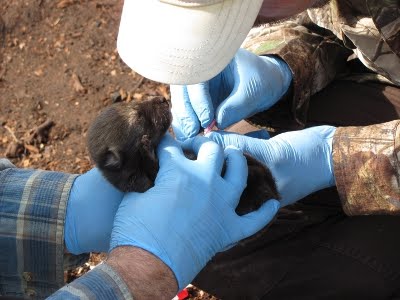
Fostering is when pups from one litter (typically a captive-born litter) are placed in another litter (typically a wild-born litter) to be raised by parents that are not their own. Fostering pups from a captive litter to a wild litter has been a successful tool used by the Red Wolf Recovery Program as a means to increase the numbers of wild red wolves and enhance the genetic diversity of the wild population.

The Red Wolf Recovery Program first fostered pups into a wild litter in 2002. A pair of two-week old pups born at the North Carolina Zoological Park were placed in a wild wolf den to be raised alongside the wild pups. The fostering was a success, and subsequent fostering efforts have yielded equal success. In fact, no wild red wolf mother has ever been known to reject a fostered pup, and the fostered pups’ survival rates appear to be equal to that of their wild-born “siblings.”
A few stipulations are adhered to when fostering pups, though. First, the pups are ideally no more than two-weeks of age at the time of the fostering. The mother’s maternal instinct is believed to be very strong with pups of this age, which decreases the likelihood of pup rejection. Also, the pups have limited mobility at this age, increasing the likelihood that they will stay in the den and not wander off before the mother returns. Another stipulation is that the captive-born pups should be very close in age to the wild-born pups. This decreases the likelihood of some of the pups out-competing others for food. Lastly, a potential foster mother is usually selected based on her having a relatively low number of pups in her litter, coupled with her proven ability to have successfully raised a litter in previous years. When combined, these conditions increase the likelihood that the mother wolf will be able to successfully raise a couple of extra pups added to her litter.

So, what was so special about fostering pups in 2012? Well, this year we fostered two captive-born pups into a litter of three wild-born pups that were born to a mother that was once a captive-born fostered pup! In addition, two other wild red wolves (1 male and 1 female) that were once fostered pups had litters of their own this year!
These are a few of the great examples of how successful fostering pups has been through the years for the Red Wolf Recovery Program. -- Ryan